Polarised Light Microscopy (PLM) Analytical Services
Polarized Light Microscopy is primarily used to identify asbestos fibers in bulk samples of building materials. It forms the basis for the identification and classification of asbestos in bulk samples such as thermal system insulation, spray applied plasters and coatings, floor tile, ceiling tile, construction adhesives and caulks, and many other materials.
Based on their physical and chemical properties, there are two major groups of asbestos: serpentine and amphibole.
Serpentine
Serpentine fibres are long, flexible and curved. These fibres can be woven together. The main type of serpentine asbestos is chrysotile (white asbestos), which is the main type of asbestos used in manufacturing.
Amphibole
Amphibole fibres are straight and stiff. These fibres are generally brittle and rod- or needle-shaped, which limits their commercial usefulness. There are 5 sub-types of amphiobole asbestos, including:
• Crocidolite (blue asbestos)
• Amosite (brown asbestos)
• Actinolite
• Anthophyllite
• Tremolite
Because it has heat-resistant and insulating properties, asbestos was used in a wide range of manufactured products. Before 1990, asbestos was mainly used for insulating buildings and homes against cold weather and noise, and for fireproofing. Asbestos was used by industry, construction, and commercial sectors in products such as:
- Building materials (roofing sheeting, roof sealants, ceiling and floor tiles, fascias, barge boards, eaves, paper products and felts, house siding, and asbestos-containing cement and plaster products).
- Friction materials (automobile clutch pads, brake linings, pads and shoes, and transmission parts).
- Fire and heat protection wear.
- Industrial furnaces and heating systems.
- Asbestos textiles (fabrics).
- Heat, electrical, and sound insulation or wrappings.
- Insulation for hot and cold areas.
- Packing materials, gaskets, linings, and coatings.
- Reinforcement of plastic products, thermoset and thermoplastic resins.
- Filler in resins, plastics and caulking and in asphalt road surfacing.
Preparation of a sample depends largely on the type of building material being sampled. Some common building materials sampled or suspected of containing asbestos include: joint compound/sheetrock, sheet vinyl, plaster, floor tiles, and insulation. Sometimes the asbestos fibers need to be extracted from building material in order to be prepared.
Receiving/Collecting and Opening samples
All samples are, and should be delivered and when collected inserted into in airtight containers. Once received, we open the contained samples once under a particle hood enclosure. This enclosure lets air in naturally (using negative pressure) and routes it through a high efficiency particulate air (HEPA) filter to prevent particles of asbestos from entering ambient air, ensuring the analyst’s safety.
Analysing Asbestos samples
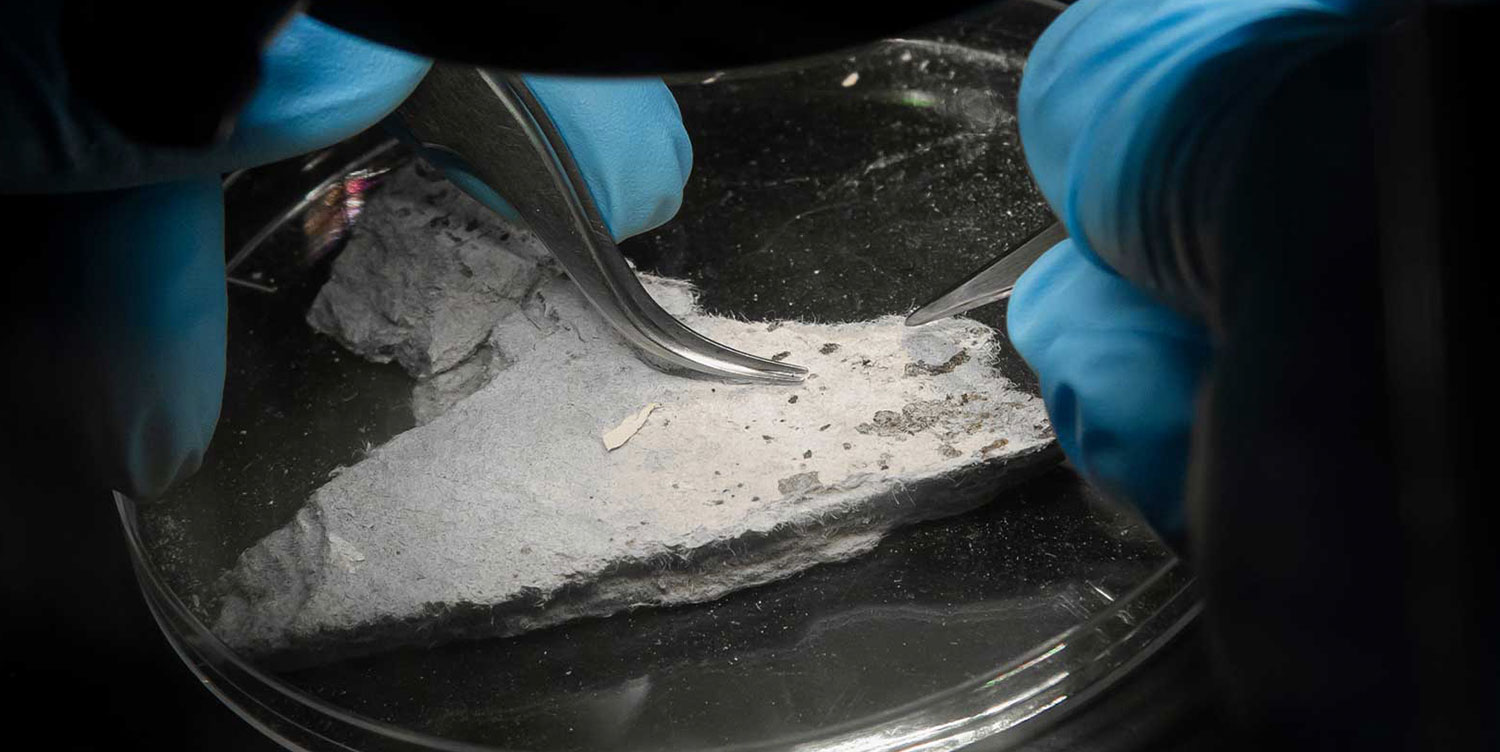
Once the building material is placed under the stereoscope for viewing, the analyst attempts to locate fibers in the matrix and pull them out with forceps. This is possible, and even plausible for certain kinds of materials: sheet vinyl, Transite, and popcorn ceiling textures. But, it’s nearly impossible for other types of materials like mastics, joint compounds, paint, and floor tiles. If the material allows the analyst to pull fibers, then the analysis work is done. If fibers are potentially bound into the matrix of the material, then other methods are employed to break apart the matrix.
For example, asbestos fibers in joint compound are almost always too small or to dirty to be seen under the stereoscope. The joint compound needs to be scraped and then crushed for a more detailed analysis under the Polarized Light Microscope (PLM). Different properties of the asbestos are measured and recorded during this to ensure correct identification and quantification.
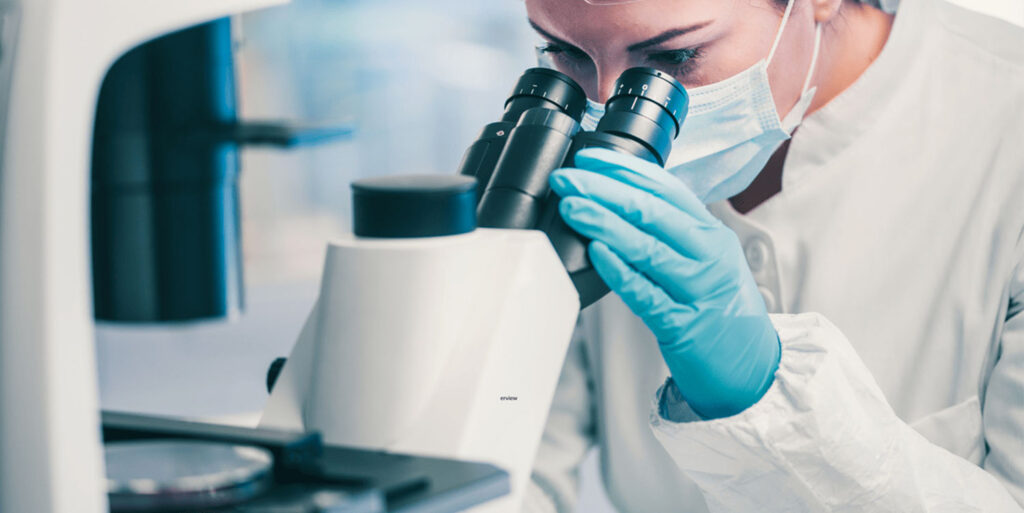
The final determination of the presence of asbestos (and asbestos percentages) is made under the PLM microscope. We formally report this information to our clients.